
Wanted Dead or a Wild, released by Hacksaw Gaming in 2021, is not a slot that disguises what it is. High volatility, a 96.38% RTP, and a 12,500x max win ceiling make the risk profile explicit from the start. Built around a Wild West shoot-out theme on a 5×5 grid with 15 fixed paylines, it compresses substantial payout potential into infrequent, high-impact hits. Before loading it up at a Canadian online casino, understanding exactly what that means for your session is worth the time.
What High Volatility Actually Means for Your Bankroll
Volatility doesn't describe how much a slot pays - it describes how those payments are distributed across spins. Low-volatility games spread smaller returns frequently, keeping balances relatively stable. High-volatility games like Wanted Dead or a Wild casino concentrate payout potential into less frequent, larger events. The result is a session rhythm defined by extended quiet periods punctuated by significant hits.
In practical terms, going twenty, forty, or sixty spins without a meaningful win is expected behaviour - not a signal that something is wrong. Canadian players funding sessions via Interac should be especially conscious of this: a deposit that feels comfortable for low-variance play can erode quickly when variance is high and stakes aren't calibrated accordingly.
The upside of this design is real. When the slot pays, it can pay substantially - and the 12,500x ceiling isn't a theoretical abstraction. It's a figure accessible through the bonus mechanics. But the path to it requires patience, a clear stake plan, and an accurate read of your own tolerance for variance.
Wanted Dead or a Wild: Base Game Risk Profile
The 5×5 grid with 15 fixed paylines is a deliberate structural choice. More reels and a fixed payline count tend to produce win conditions less frequently than more compact grids, which pushes base-game variance higher. Hacksaw Gaming has leaned into that tension - the base game is designed to feel taut, not comfortable.
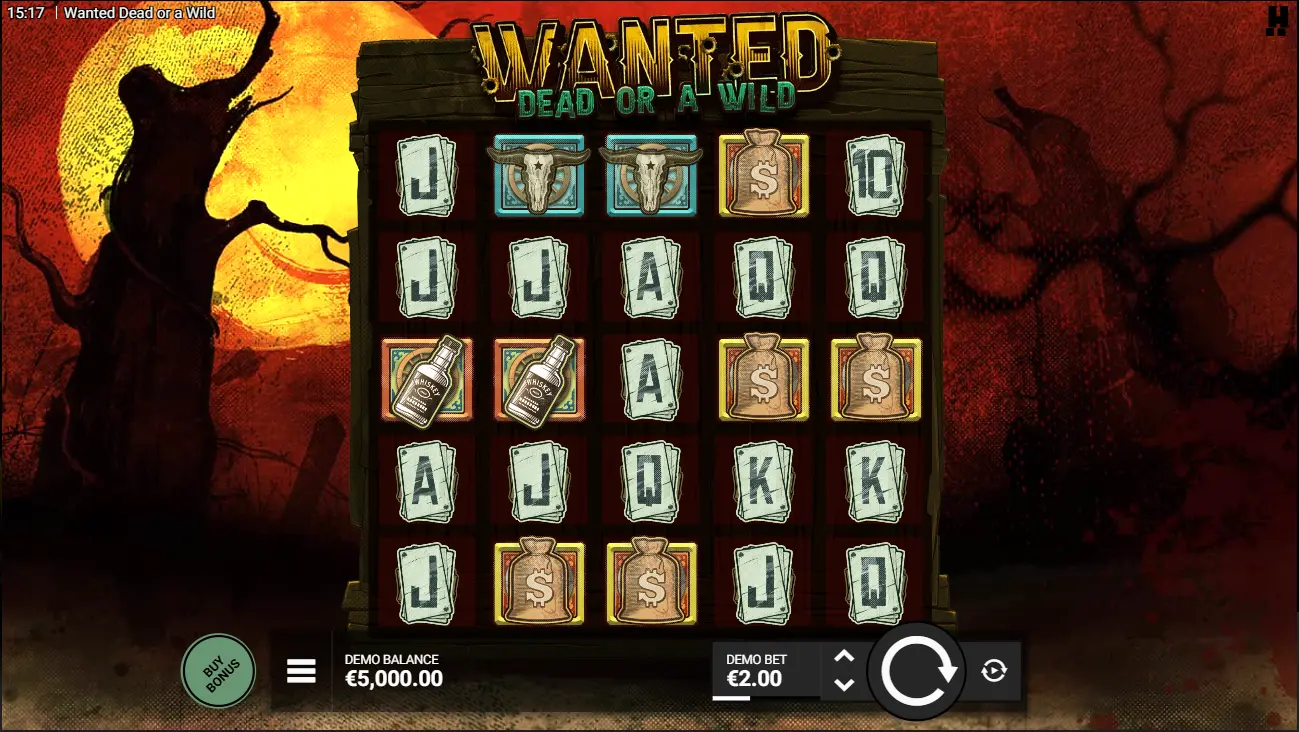
Stakes run from £0.20 to £100 per spin. In CAD, that lands in a range accessible to most Canadian players, though anyone operating near the top end should expect significant balance movement during dry spells. There is no low-variance mode or alternative bet structure - you are in the deep end at every stake level.
The 96.38% RTP sits above the industry average of roughly 95-96%, which matters over millions of spins. In any individual session it is largely irrelevant - what matters is that the theoretical return is concentrated into the slot's high-impact mechanics rather than distributed evenly across base-game spins. Players expecting RTP to stabilise their session returns will find the math doesn't work that way.
VS Duels and Multipliers - the Variance Engine
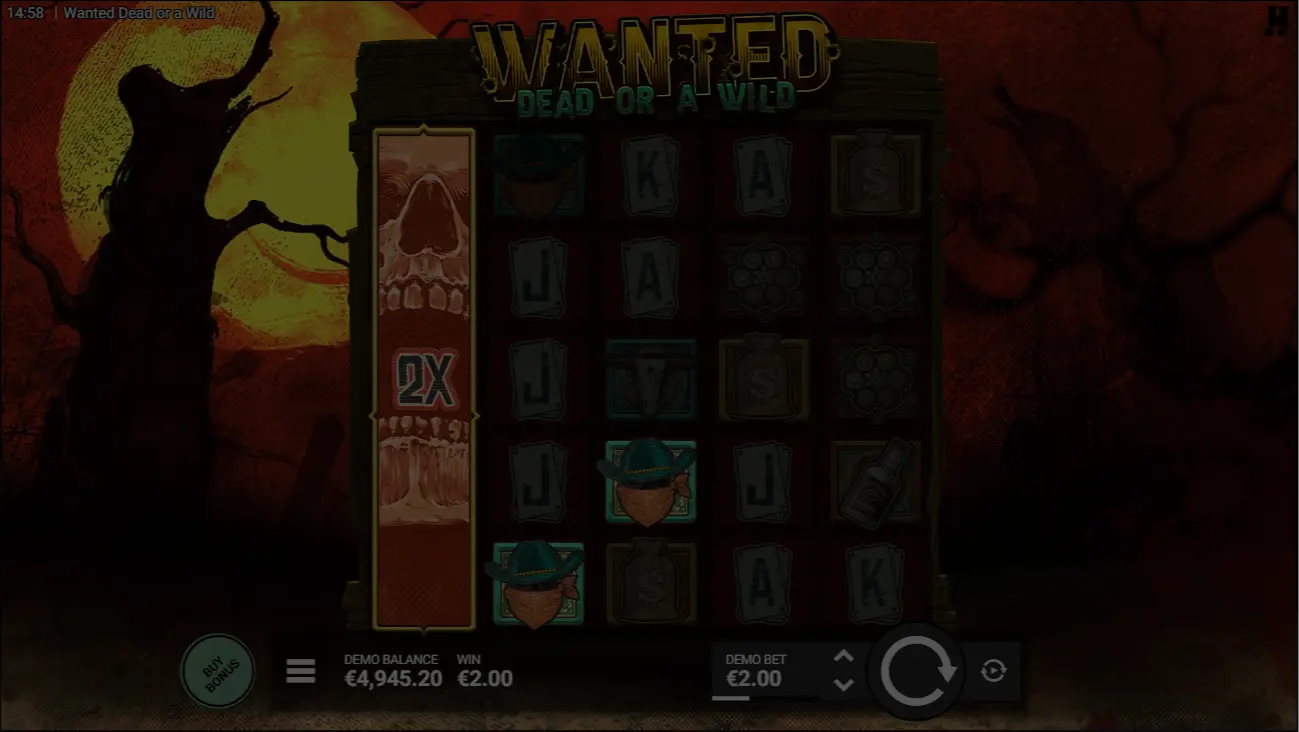
The VS Duel mechanic is the structural core of Wanted Dead or a Wild and the primary source of its variance. When a Duel triggers, two characters enter a shoot-out sequence with multipliers on the line. The outcome is binary: the right result fires the multiplier chain; the wrong result doesn't. There is no partial reward for near-misses.
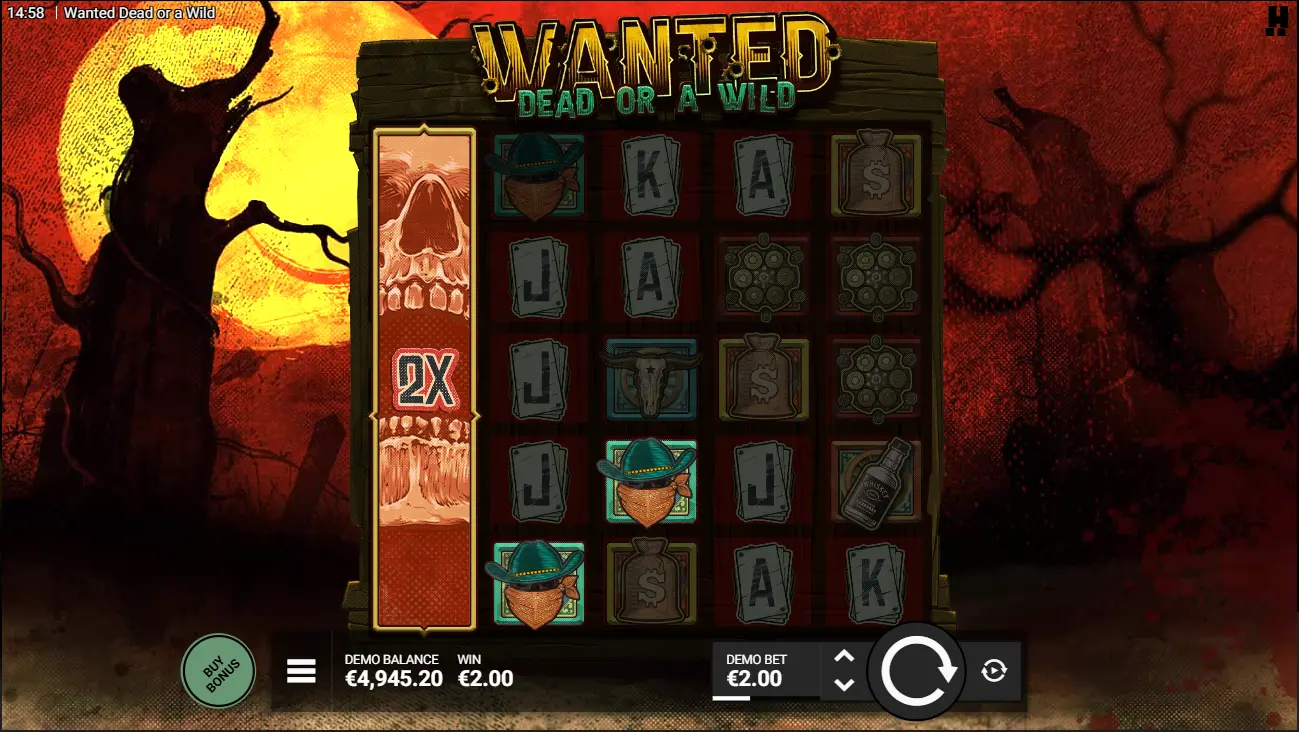
Multipliers can stack across Duel sequences, compressing large win potential into brief bursts. That compression is exactly what makes the mechanic volatile - it doesn't spread value across many small outcomes. It concentrates it. A single Duel sequence can deliver a session-defining win or add nothing to your balance.
The practical implication for risk management: a Duel trigger is an event, not a guarantee. Players who treat every Duel as an imminent large payout are misreading how the RNG governs outcomes. Each Duel result is independent. The anticipation is part of the design; the outcome is not predetermined by the trigger itself.
Three Bonus Rounds, Three Risk Profiles
Beyond the VS Duel system, Wanted Dead or a Wild includes three distinct bonus rounds: Duel at Dawn, Dead Man's Hand, and The Great Train Robbery. Each carries its own mechanics and, by extension, its own within-bonus variance profile.
Having three separate bonus structures means variance isn't uniform even when you reach a feature. Different bonus modes likely distribute their win potential differently - some may offer more consistent mid-range returns while others push the ceiling higher at the cost of frequency. Which bonus you land in adds a layer of uncertainty beyond the bonus outcome itself.
- Duel at Dawn - a shoot-out style bonus built around the character-vs-character mechanic with multiplier sequences
- Dead Man's Hand - themed around the historic poker hand; win structures tied to the hand's outcome logic
- The Great Train Robbery - a heist-framed bonus with its own escalating reward structure
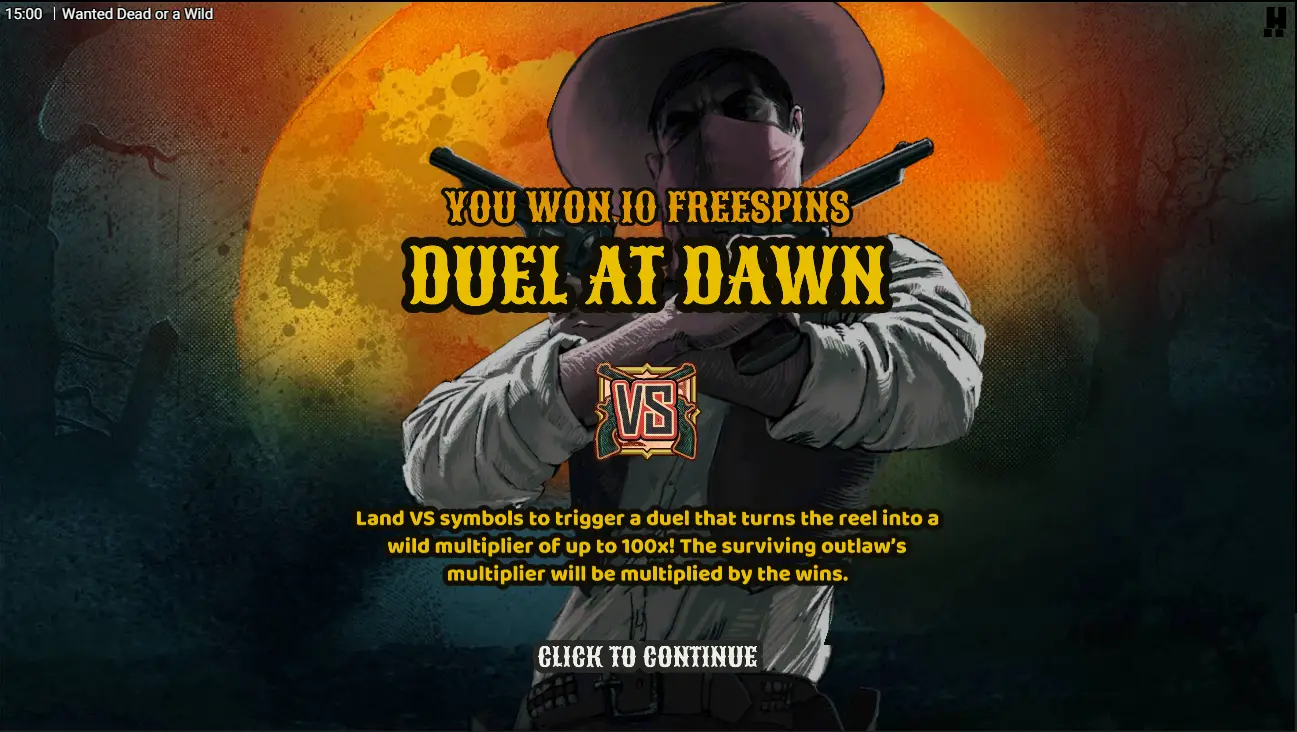
The variety adds replayability. It also means two identical bonus triggers can produce very different sessions depending on which round activates and how that round's variance resolves. Factor that into expectations going in.
Wild Symbols and Positional Variance
The wild symbol in Wanted Dead or a Wild functions as more than a simple substitution piece. On a 5×5 grid with 15 paylines, wild placement has a direct impact on base-game outcomes that goes beyond counting payline completions.
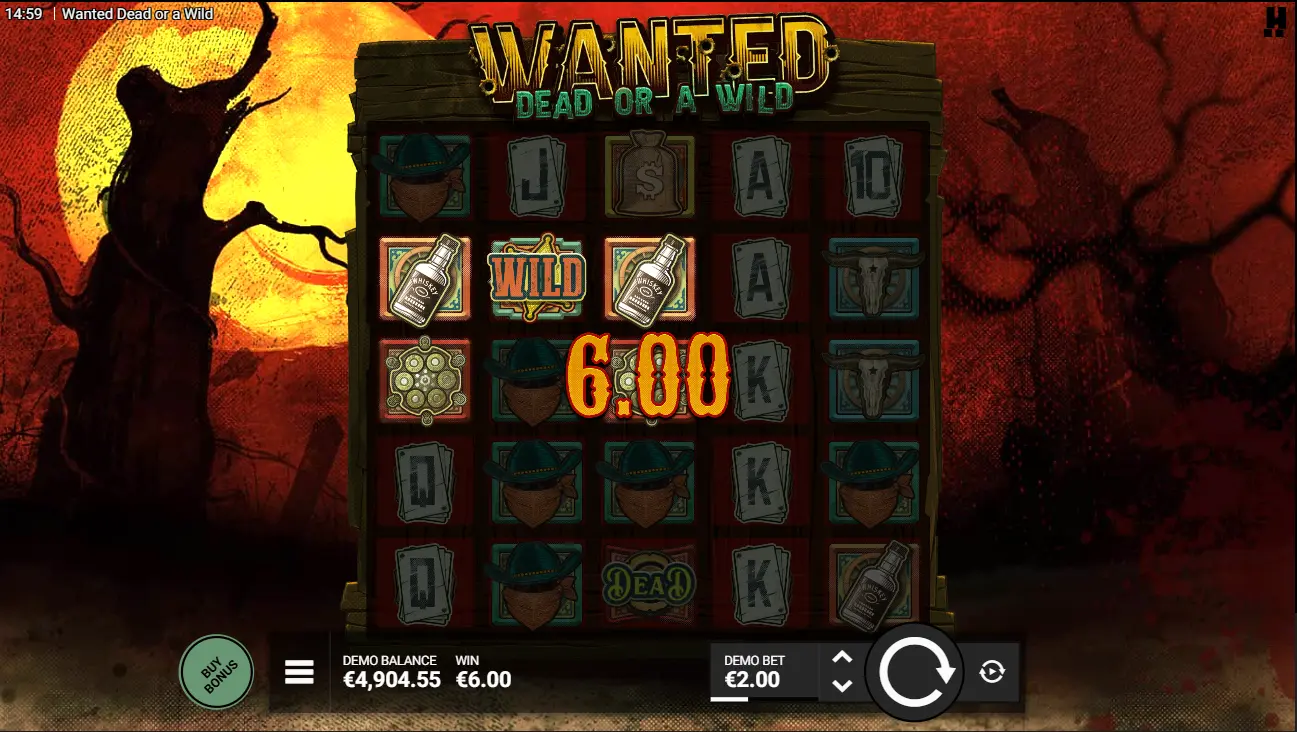
A wild landing in a position that completes or extends a multiplier-linked sequence is worth significantly more than the same wild landing in a low-traffic position. That positional sensitivity amplifies variance at the symbol level - spin results aren't just determined by which symbols appear, but by where they land relative to active lines and mechanic triggers.
For players tracking session patterns, noting whether wilds are consistently resolving in high-value or low-value positions gives some texture to the session rhythm. It doesn't predict future outcomes - each spin is independent - but it helps frame whether the current stretch reflects expected variance or something worth pausing on.
Dead Man's Hand and Bonus Volatility
The Dead Man's Hand bonus is named after one of the most recognisable hands in poker folklore: aces and eights, held by Wild Bill Hickok. As a bonus mechanic, it ties the slot's Wild West theme to a game-within-a-game structure where the hand's outcome governs payout direction.
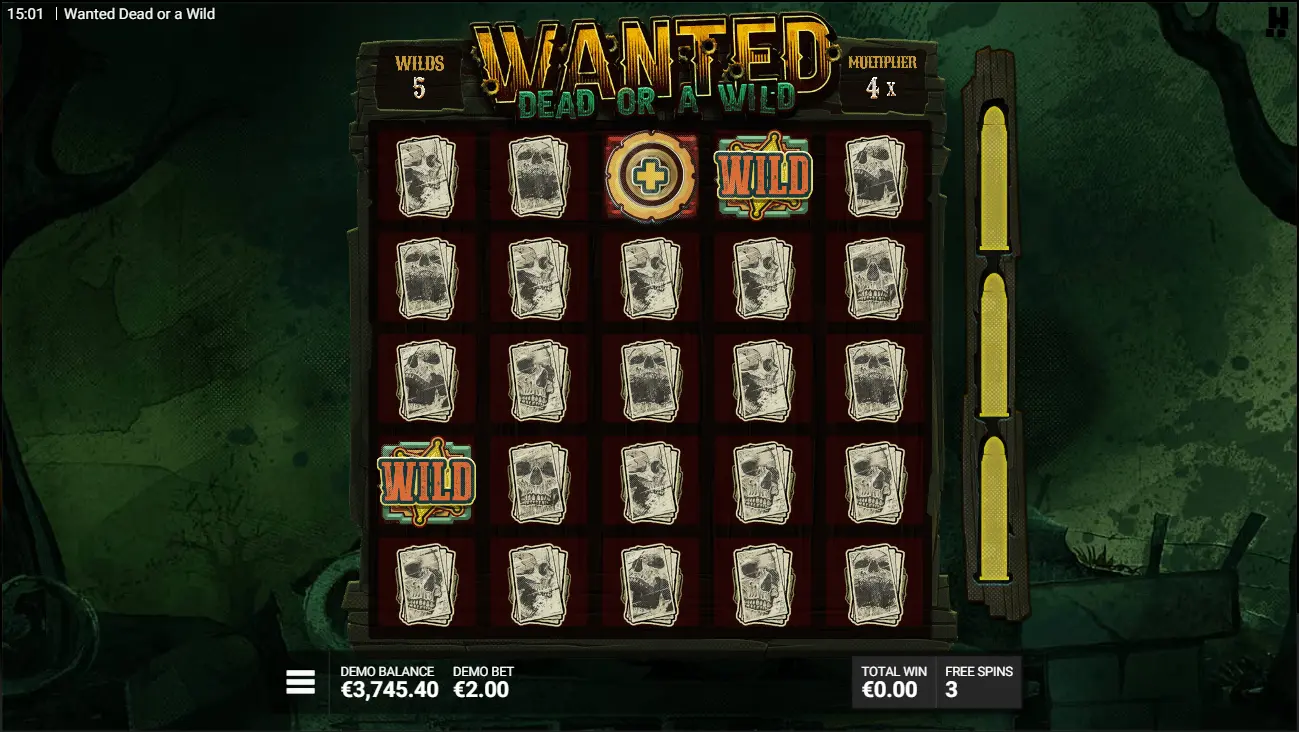
From a risk perspective, card-outcome mechanics tend to be high-variance by structure: the result is discrete, the stakes are condensed into a single resolution, and there's no graduated payoff. That makes Dead Man's Hand one of the more acute variance moments in an already high-volatility slot. Landing it during a Bonus Buy session - where the cost to enter is already elevated - concentrates risk further.
Understanding this before entering the feature reframes expectations. The goal isn't to predict the outcome; it's to enter with a stake that makes the result tolerable regardless of which way it goes.
Bonus Buy and Bankroll Strategy
The Bonus Buy option in Wanted Dead or a Wild lets players purchase direct access to a bonus round at a premium on the base stake. It's a feature that compresses time, not probability - buying in doesn't improve your odds within the bonus. It eliminates base-game waiting in exchange for a higher upfront cost.
For players on a tight session budget, Bonus Buy is a fast route to variance-driven session endings. The premium stake required means a single poor bonus outcome can consume a significant portion of the bankroll in one event. For players with a larger buffer who have been grinding base-game spins, it can be a deliberate choice to accelerate exposure to the high-multiplier sequences rather than waiting for organic triggers.
In Ontario and other regulated Canadian provinces, Bonus Buy is available at licensed operators governed by the AGCO (Alcohol and Gaming Commission of Ontario). If you're playing through a platform authorised under iGaming Ontario - whether OLG or a licensed private operator - the feature should be accessible. Verify your platform's licensing status before funding via Interac if you're unsure.
| Spec | Detail |
|---|---|
| Provider | Hacksaw Gaming |
| Release | 2021 |
| Grid | 5×5 |
| Paylines | 15 fixed |
| RTP | 96.38% |
| Volatility | High |
| Min Bet | £0.20 |
| Max Bet | £100 |
| Max Win | 12,500x |
| Bonus Buy | Yes |
Is Wanted Dead or a Wild Right for Your Risk Profile?
Wanted Dead or a Wild by Hacksaw Gaming is a slot built for players who understand variance and have the bankroll depth to absorb it. The VS Duel mechanic, the three-bonus structure, the wild positional sensitivity - all of it is oriented toward concentrated, high-impact payouts rather than gradual balance building. The 12,500x ceiling and 96.38% RTP make the upside credible. The high volatility makes the path to it demanding.
A few ground rules worth applying before any session:
- Set a session floor - a minimum balance at which you stop, separate from your total budget
- Keep individual stakes to 1-2% of your session bankroll at most; at £0.20 minimum, that means at least £10-20 to play with any meaningful runway
- Treat bonus triggers as events, not wins - entering a feature doesn't guarantee a profitable outcome
- Use demo mode first; most Canadian online casinos offer Wanted Dead or a Wild without real-money stakes
If sessions are running longer than planned or stakes are drifting upward to recover losses, that's a signal worth acting on. ConnexOntario (1-866-531-2600) offers free, confidential support for Canadian players navigating gambling habits. Responsible play isn't a footnote - for high-volatility slots specifically, it's the baseline that makes the experience worth having.